Nurturing arts
Daily routines, healthy meals, rest, and clear boundaries give young children the security to grow.
Red Granite's academic model is not less rigorous because it is slower with young children. It is careful about when and how formal skills are introduced, so learning can take root.
In the early years, children learn through imitation, rhythm, and purposeful activity. Rather than subject-based instruction, the 4K–K program weaves literacy, math, science, and the arts into seasonal themes and daily rhythm. Academics begin to unfold in first grade, following the neurological development of each child's brain — not a fixed calendar.
Daily routines, healthy meals, rest, and clear boundaries give young children the security to grow.
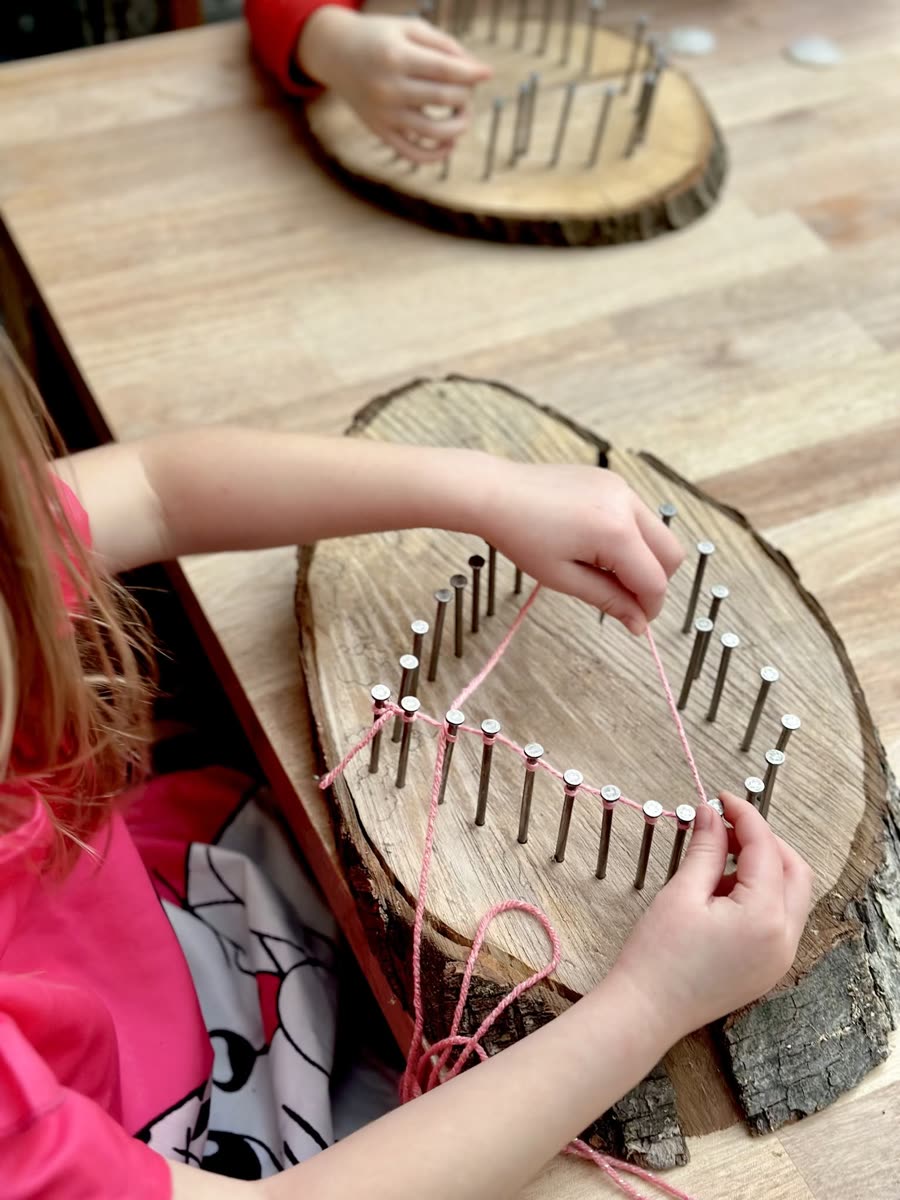
Cooking, woodworking, cleaning, and gardening show children that purposeful effort produces real, satisfying results.
Imaginative play, painting, puppetry, and storytelling develop inner life, language, and attention.
Sharing, cooperation, and mixed-age settings build the capacity to learn alongside others.
Extended outdoor time across the seasons connects children to the living world in a direct, embodied way.
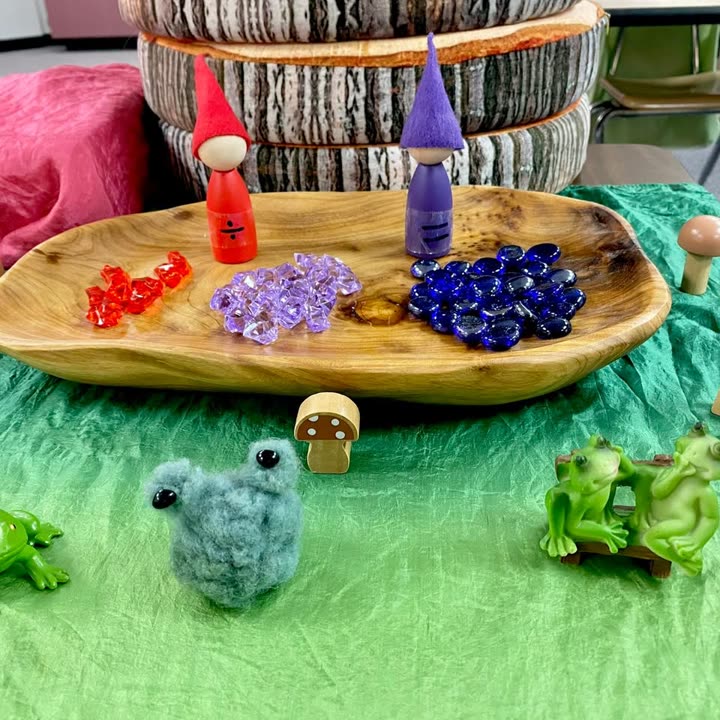
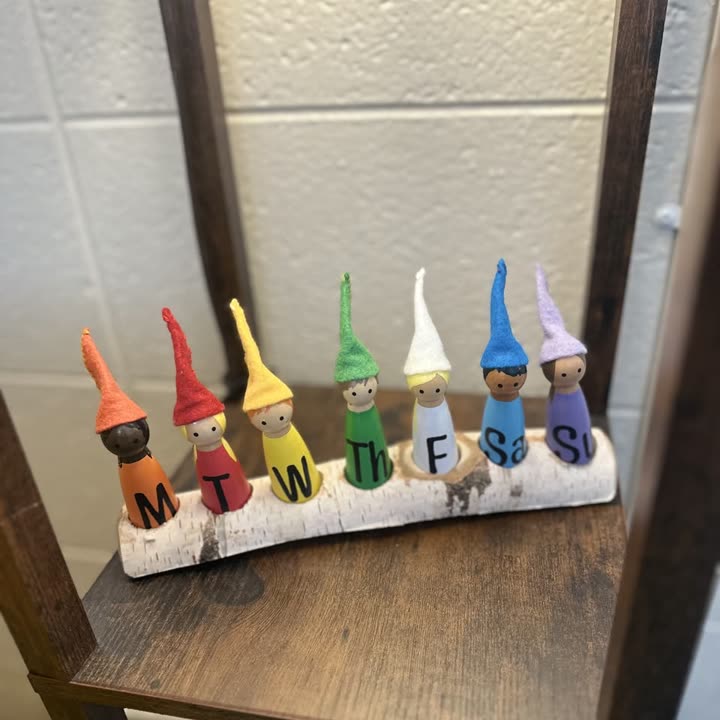
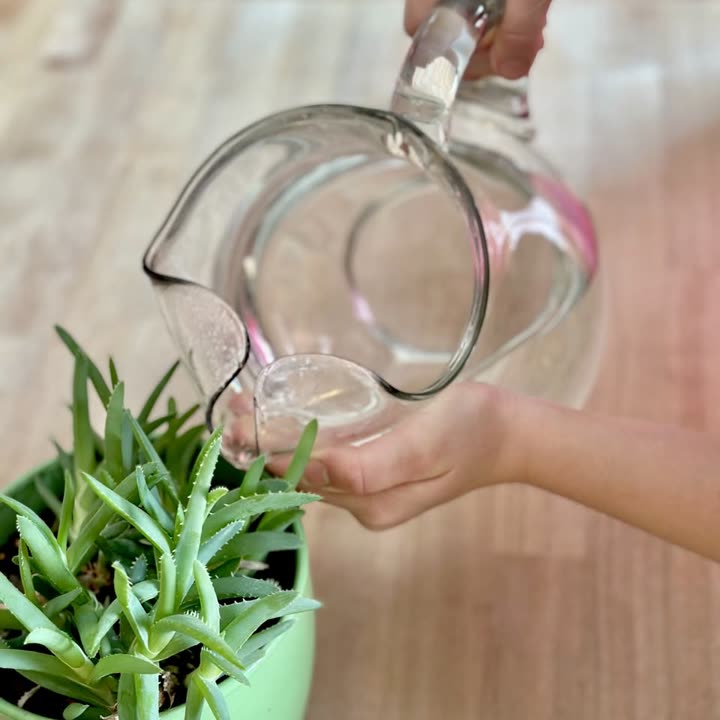
Red Granite runs the only full-day 4K program in the Wausau School District — a developmentally appropriate day grounded in the Public Waldorf model. Multi-age early childhood classrooms nurture creativity, imagination, and emotional growth in a rhythm-rich, play-centered environment, supporting the whole child: head, heart, and hands.
Monday/Wednesday or Tuesday/Thursday rotation, with the option for some Fridays.
Movement, storytelling, outdoor exploration, and purposeful play support natural development.
A full-day rhythm gives young children consistency and gives parents a dependable school day.
Through imitation, guided activity, and nature-based work, children build social, emotional, and academic readiness.
Each week has a shape — some days are painting days, others are baking, crafts, or cooking. The rhythm gives children the security of knowing what kind of day it is, and it changes with the seasons.
Early childhood is a unique period of life that deserves respect, guidance, nurture, and time. Meaningful work and creative play in a structured environment help children build the social skills they will need to realize their potential in relation to others.
Academic skills build progressively across the grades, held together by main lesson blocks, integrated arts, and a curriculum that connects academic content to the life of a child. Red Granite partners with Tomorrow River Community Charter Schools, whose experienced faculty mentor Red Granite's teachers.
Children progress from knitting in first grade through embroidery, crocheting, and woodcarving in fifth — building fine motor skills, patience, sequencing, and self-esteem through real work.
Recorder begins in first grade, alongside choir, poetry memorization, and class dramas performed for the community.
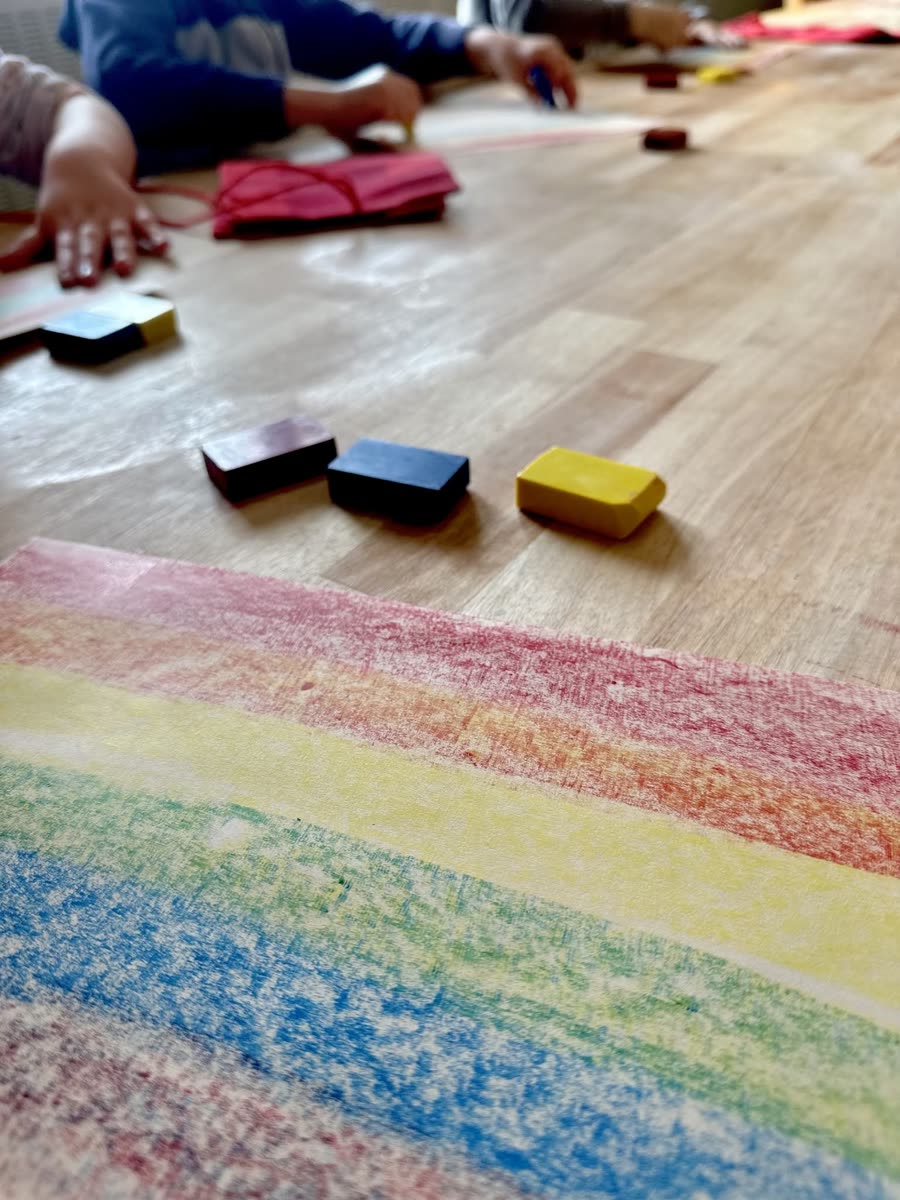
Watercolor emphasizes color exploration over representation. Students also work in beeswax modeling, form drawing, and clay, with increasing depth and precision across the grades.
Beginning in first grade, trail walks, gardening, and farm visits ground science in observation — children see and touch before they are asked to name or categorize. Third grade includes animal husbandry; fourth, zoology; fifth, botany.
French is introduced through songs, plays, rhythms, and poems in the early grades, progressing to vocabulary, reading, and writing by fourth and fifth grade.
Number qualities and the four operations in first grade grow through fractions, decimals, and ancient geometry by fifth. Times tables are memorized systematically, held in the body through rhythm and movement.
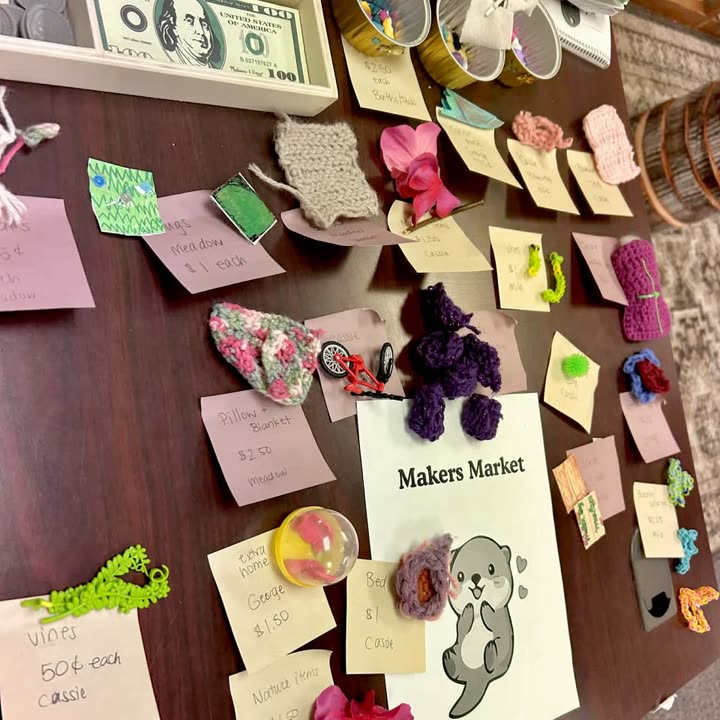
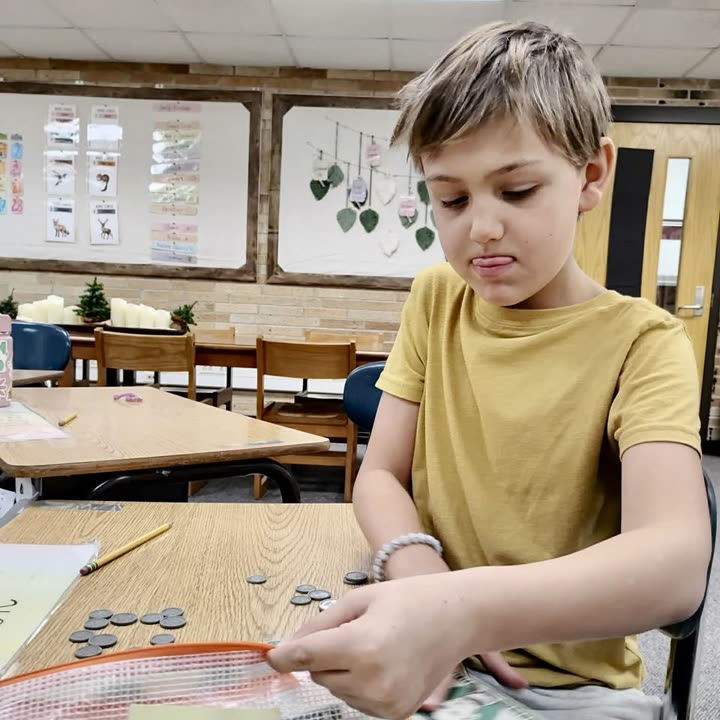
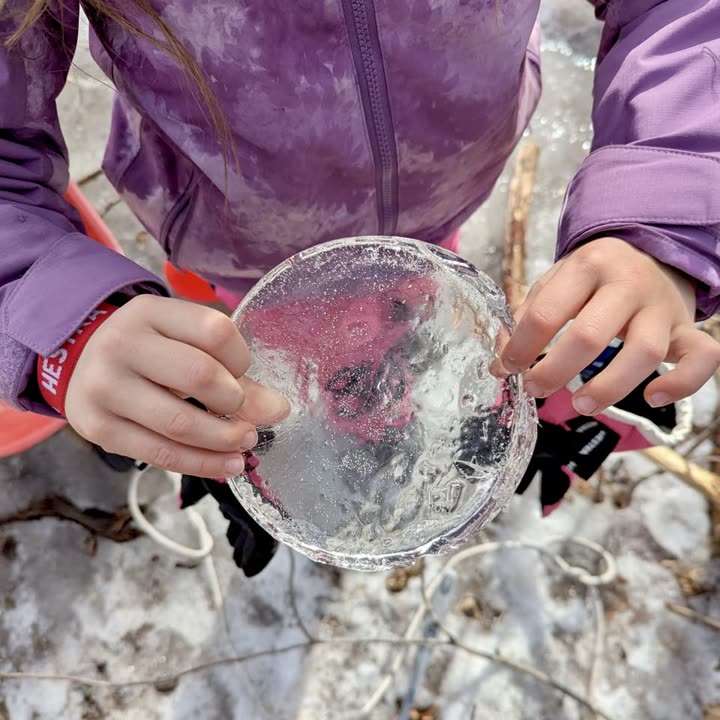
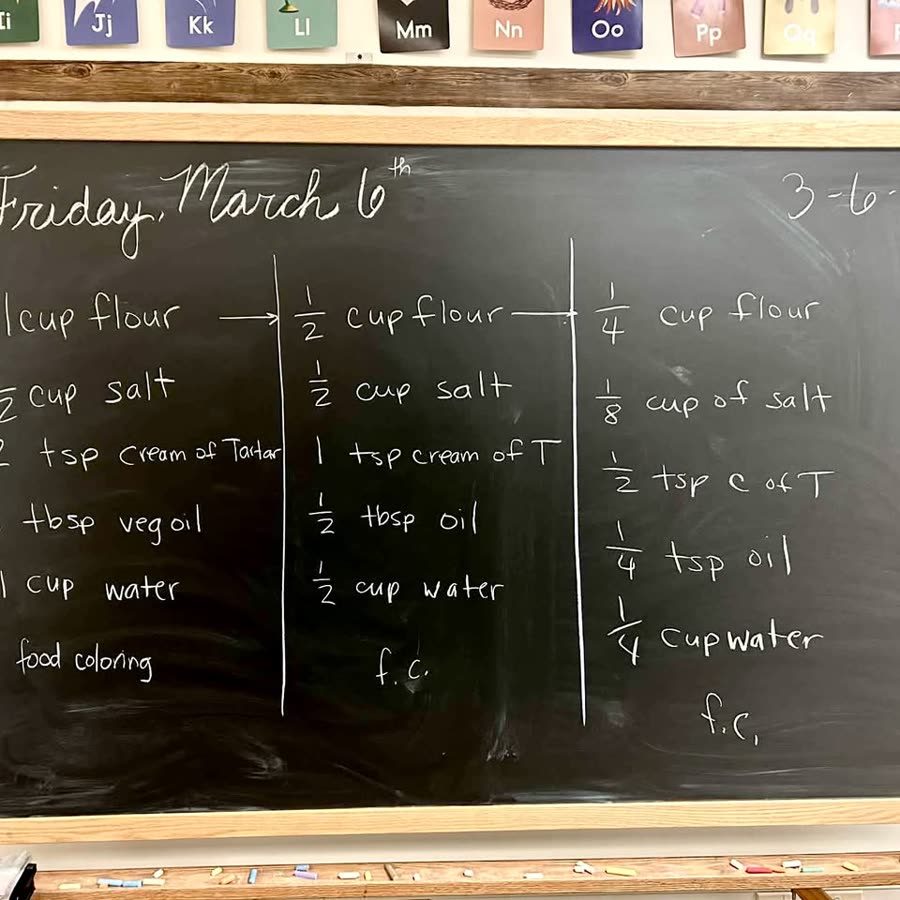
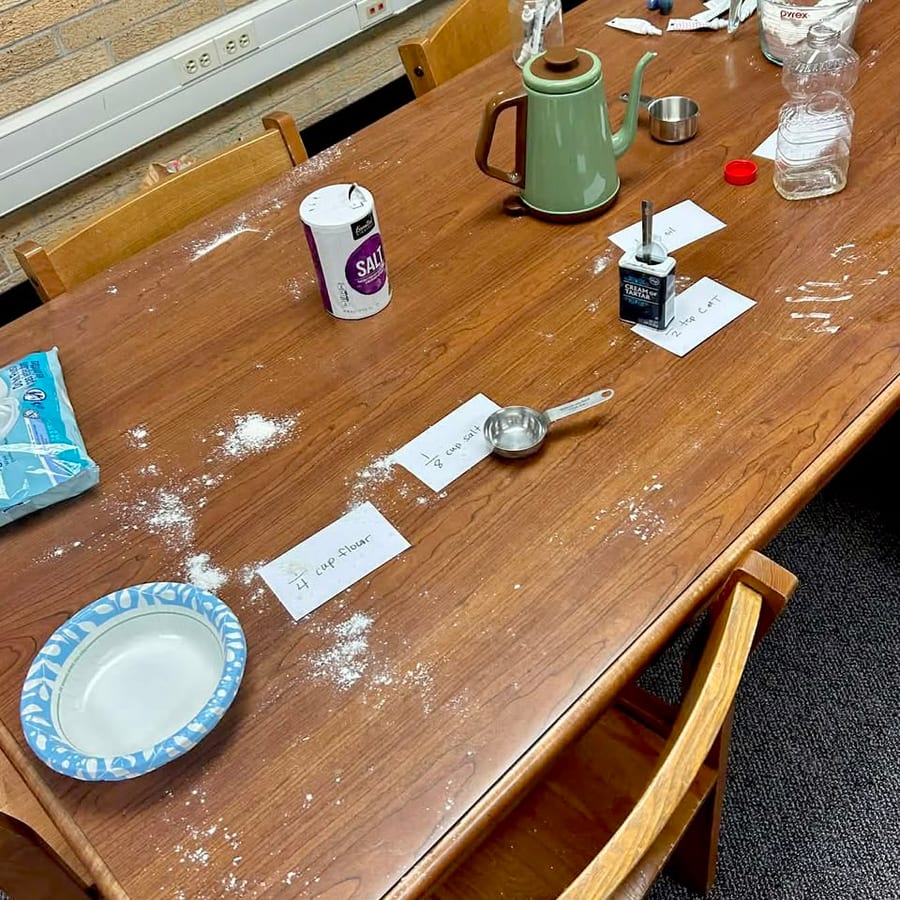
A Friday main lesson: one playdough recipe written out three times, each column halving the one before it. A cup of flour becomes a half, then a quarter. The fractions on the board become the batch on the table — and then something the children carry home in their hands.
Teachers observe developmental markers — fine motor skills, attention, social readiness — before pressing formal reading and math skills forward.
Core topics have enough time to deepen through story, practice, art, movement, and recall over several weeks rather than days.
Children use drawing, music, form, handwork, and physical movement as part of academic learning — not as extras on the side.
Technology is purposefully limited and developmentally appropriate. It is not the default language of the early grades.
The best way to understand any of this is to watch it happen — a lesson in progress, the work on the walls, how a teacher speaks about readiness.
Plan a visit